Cutting-edge production solutions for advanced formulations serving modern farmers, exported worldwide
where quality becomes method
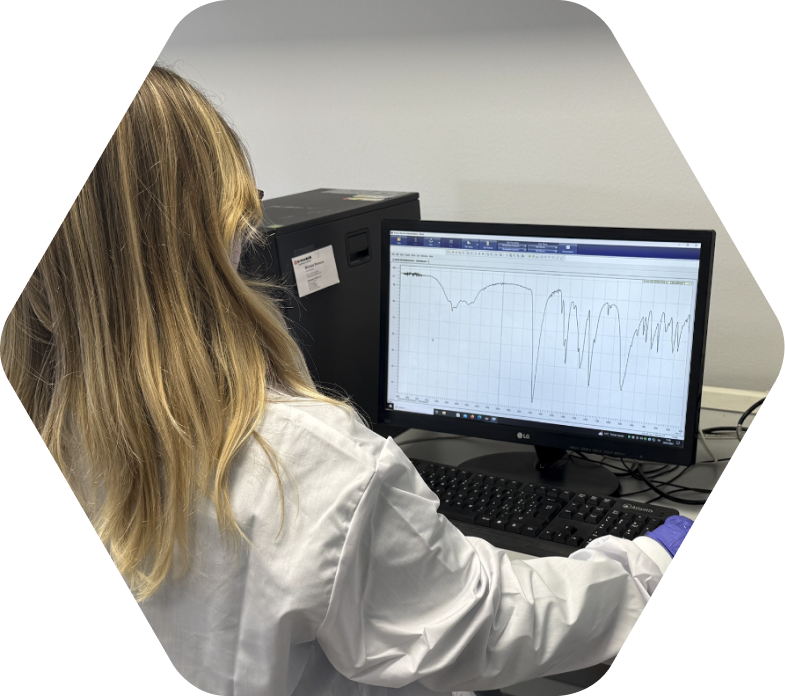
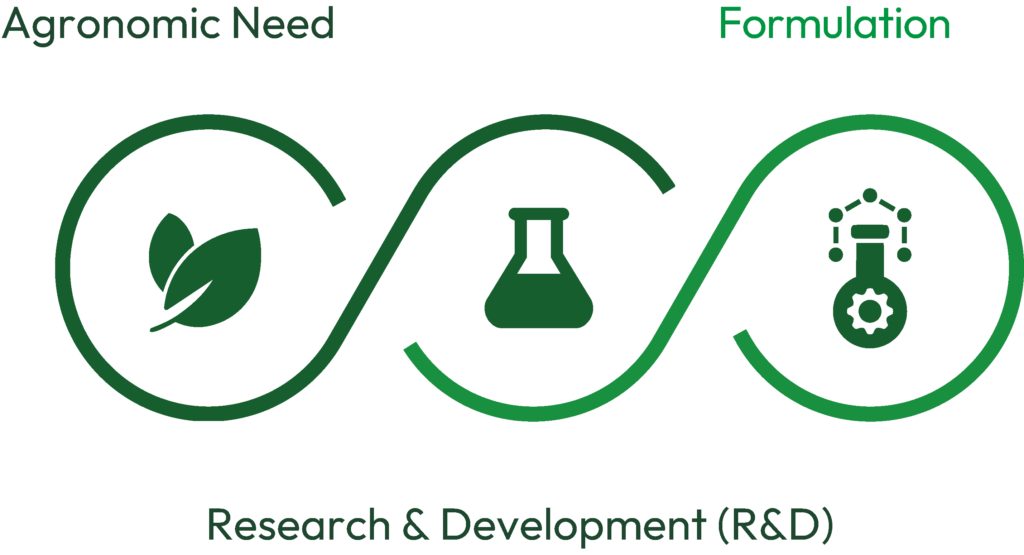
Research has been in Organazoto’s DNA since its inception in the early 1970s. Today, thanks to numerous collaborations with universities and research centers worldwide, investment in R&D is even more central: a continuous commitment to transforming scientific knowledge into concrete, reliable, and high-performance solutions for modern agriculture.
It is precisely the research and development activity that has made it possible to create technologically advanced products capable of meeting the real needs of farmers, offering measurable advantages such as: improved agronomic performance, thanks to more balanced plants in a general state of well-being; maximum respect for the environment and the operator, with more sustainable and safe solutions; optimization of management costs, reducing interventions and increasing profitability.
our laboratories
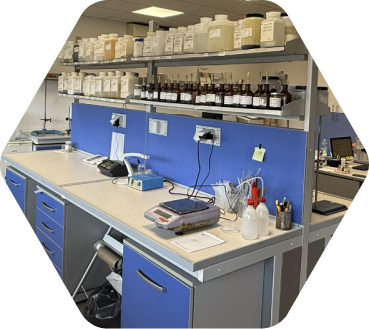
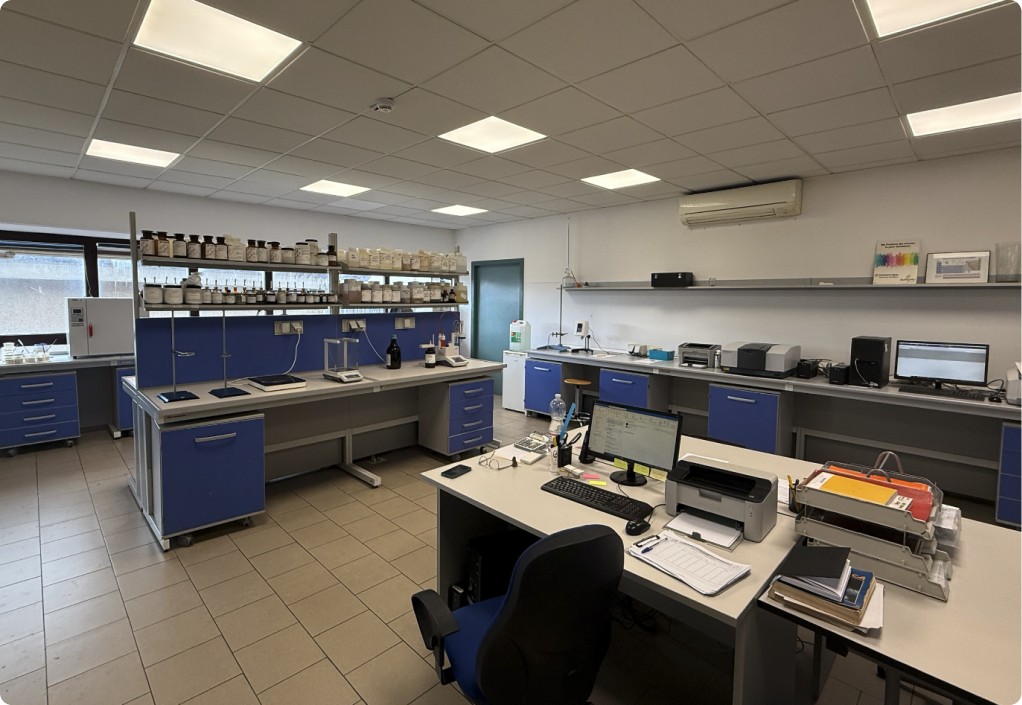
At the headquarters in Italy, the Organazoto Hub houses two specialized laboratories that represent the scientific and technical heart of the company:
Microbiological Laboratory
It is responsible for developing and isolating registered microbial strains and related technologies used in the microorganism line. In parallel, it conducts research activities on new formulations containing plant and animal extracts, with the aim of constantly expanding the range of innovative solutions.
Quality Laboratory
It develops a wide range of products, including bioactivators, phytofortifiers, meso & microelements, fertigators, as well as fertilisers in pellet and flakes form (organic, organo-mineral and substrates). The laboratory also carries out rigorous and comprehensive checks throughout the entire supply chain: from incoming raw materials right through to the analysis of the finished product, to ensure the very highest standards and full compliance with Italian and international regulatory requirements, even the most stringent ones.
The value creation process has accompanied Organazoto since its origins. Already at the dawn of its industrial activity, the company produced the first solid nitrogen fertilisers through innovative thermobaric hydrolysis technologies, an advanced method that excludes the use of chemical substances and exploits exclusively temperature and pressure to transform organic matrices into nutrients with high agronomic efficiency. A pioneering choice that, even today, represents one of the pillars of the company’s production philosophy: innovating in full respect of nature. It is precisely from this process technology that, over the years, further engineering solutions and technologies have been progressively developed, perfected, and patented.
Our Organazoto technologies
The technologies used by Organazoto in the production of fertilisers are truly outstanding. Our ongoing research into new solutions enables us to continually introduce new products with ever-improving nutritional and technical characteristics.
is an innovative extraction technology under supercritical conditions and at low temperatures applied to brown algae such as Ascophyllum spp., Laminaria spp., Fucus spp. and Macrocystis spp.
This process allows preserving the integrity of natural active ingredients, maintaining a high concentration of the most valuable compounds and ensuring superior quality standards.
Products that integrate this technology are distinguished by their high content of substances with high biological value, including: natural hormones and compounds with hormone-like activity; functional polysaccharides; amino acids of plant origin; elicitor molecules capable of supporting the physiological responses of the plant.
Read more
An innovative plant extraction process under supercritical conditions applied to various botanical species, including Euphorbiaceae, Lamiaceae, Myrtaceae, Urticaceae, Pinaceae, Amaryllidaceae, as well as grapefruit and orange seeds.
This technology allows preserving the integrity of natural components, maintaining high phytostimulant and antioxidant properties of plant matrices.
Read more
An advanced technology designed to improve the adhesion of liquid formulations to the plant surface. It promotes more uniform distribution on the foliar apparatus, increasing nutrient absorption and optimizing the overall effectiveness of the treatment.
Read more
Production technology based on an advanced consortium of yeasts, bacteria, and fungi that operate synergistically in the rhizosphere. It includes beneficial bacteria such as Azotobacter chroococcum OG15342, Azospirillum brasilense OG19325, Bacillus subtilis OG39365, Bacillus pumilus OG69589, Bacillus velezensis OG58369 and Bacillus polymyxa OG22596; mycorrhizae of the genus Glomus and fungi such as Trichoderma harzianum OG99566.
Products that integrate this technology promote a more efficient root system, strengthen tolerance to biotic and abiotic stresses, and improve the assimilation of key nutrients, particularly nitrogen, phosphorus, and potassium.
Read more
A microbial technology designed to stimulate photosynthetic activity and optimize plant nutrition, helping to reduce dependence on nitrogen fertilisers. The consortium in fact promotes asymbiotic fixation of atmospheric nitrogen thanks to the action of nitrogen-fixing bacteria.
It includes selected strains of Azotobacter chroococcum OG15342, Azospirillum brasilense OG19325, Bacillus subtilis OG39365, Bacillus velezensis OG58369 and Bacillus amyloliquefaciens OG33450, together with mycorrhizae of the genus Glomus and the beneficial fungus Trichoderma harzianum OG99566.
Read more
Is the special technology based on the use of specific physioactivators capable of promoting the absorption and availability of nutrients.
This approach allows optimizing nutritional efficiency, making elements more readily usable by the plant.
Read more
Historic technology patented by the Organazoto Hub, based on an advanced process of fermentation and humification of manure through natural microorganisms. The bedding, rich in straw and cellulosic elements, undergoes a controlled digestion process lasting approximately six months.
The combined action of enzymes naturally present in organic matter and strains selected by the microbiological laboratory allows accelerating and optimizing the transformation of the matrix, obtaining a highly stable, humified, and agronomically active amendment.
Read more
Registered technological process that enriches formulations with a targeted selection of beneficial microorganisms and plant growth-promoting fungi. Among these: mycorrhizae of the genus Glomus, Bacillus amyloliquefaciens OG33450, Bacillus megaterium OG96536, Bacillus subtilis OG39365, Bacillus pseudomycoides 1901 and Trichoderma harzianum OG99566.
Read more
It is based on an advanced process of coextrusion of organic and mineral matrices, historically adopted by the company to obtain optimal interaction between the two components. This method allows controlled and gradual release of nutritional elements, improving their agronomic efficiency.
The technology creates a stable bond between the mineral fraction and the protein organic fraction, protecting nutrients from leaching, reducing losses, and making them progressively more assimilable by plants. The result is more effective, sustainable, and lasting nutrition.
Read more
It represents the latest process technology developed at Organazoto, through which advanced control of pressures and temperatures during the production process—particularly in the thermobaric hydrolysis phase—allows the protein molecule to release ordered fractions of amino acid chains. The result is a more regular, rapid, and efficient release of protein organic nitrogen, further optimized by the special physical form in flakes of approximately 2 mm. All formulations that integrate this technology are part of the GELACTIVE line and are distinguished by concrete agronomic advantages:
reduction of application doses up to 15–20% compared to conventional pellets, thanks to greater nutritional efficiency;
simple and flexible distribution, favored by a homogeneous and highly free-flowing granule;
enhanced water-regulating action, useful for supporting the plant under water stress conditions;
faster and more uniform nutrient release, thanks to optimal distribution near the root system;
lower losses due to leaching and gassification, with more sustainable use of nutritional elements.
Read more
is an innovative extraction technology under supercritical conditions and at low temperatures applied to brown algae such as Ascophyllum spp., Laminaria spp., Fucus spp. and Macrocystis spp.
This process allows preserving the integrity of natural active ingredients, maintaining a high concentration of the most valuable compounds and ensuring superior quality standards.
Products that integrate this technology are distinguished by their high content of substances with high biological value, including: natural hormones and compounds with hormone-like activity; functional polysaccharides; amino acids of plant origin; elicitor molecules capable of supporting the physiological responses of the plant.
Read more
An innovative plant extraction process under supercritical conditions applied to various botanical species, including Euphorbiaceae, Lamiaceae, Myrtaceae, Urticaceae, Pinaceae, Amaryllidaceae, as well as grapefruit and orange seeds.
This technology allows preserving the integrity of natural components, maintaining high phytostimulant and antioxidant properties of plant matrices.
Read more
An advanced technology designed to improve the adhesion of liquid formulations to the plant surface. It promotes more uniform distribution on the foliar apparatus, increasing nutrient absorption and optimizing the overall effectiveness of the treatment.
Read more
Production technology based on an advanced consortium of yeasts, bacteria, and fungi that operate synergistically in the rhizosphere. It includes beneficial bacteria such as Azotobacter chroococcum OG15342, Azospirillum brasilense OG19325, Bacillus subtilis OG39365, Bacillus pumilus OG69589, Bacillus velezensis OG58369 and Bacillus polymyxa OG22596; mycorrhizae of the genus Glomus spp. and fungi such as Trichoderma harzianum OG99566.
Products that integrate this technology promote a more efficient root system, strengthen tolerance to biotic and abiotic stresses, and improve the assimilation of key nutrients, particularly nitrogen, phosphorus, and potassium.
Read more
A microbial technology designed to stimulate photosynthetic activity and optimize plant nutrition, helping to reduce dependence on nitrogen fertilisers. The consortium in fact promotes asymbiotic fixation of atmospheric nitrogen thanks to the action of nitrogen-fixing bacteria.
It includes selected strains of Azotobacter chroococcum OG15342, Azospirillum brasilense OG19325, Bacillus subtilis OG39365, Bacillus velezensis OG58369 and Bacillus amyloliquefaciens OG33450, together with mycorrhizae of the genus Glomus spp. and the beneficial fungus Trichoderma harzianum OG99566.
Read more
Is the special technology based on the use of specific physioactivators capable of promoting the absorption and availability of nutrients. This approach allows optimizing nutritional efficiency, making elements more readily usable by the plant.
Read more
Historic technology patented by the Organazoto Hub, based on an advanced process of fermentation and humification of manure through natural microorganisms. The bedding, rich in straw and cellulosic elements, undergoes a controlled digestion process lasting approximately six months.
The combined action of enzymes naturally present in organic matter and strains selected by the microbiological laboratory allows accelerating and optimizing the transformation of the matrix, obtaining a highly stable, humified, and agronomically active amendment.
Read more
Registered technological process that enriches formulations with a targeted selection of beneficial microorganisms and plant growth-promoting fungi. Among these: mycorrhizae of the genus Glomus spp., Bacillus amyloliquefaciens OG33450, Bacillus megaterium OG96536, Bacillus subtilis OG39365, Bacillus pseudomycoides 1901 and Trichoderma harzianum OG99566.
Read more
It is based on an advanced process of coextrusion of organic and mineral matrices, historically adopted by the company to obtain optimal interaction between the two components. This method allows controlled and gradual release of nutritional elements, improving their agronomic efficiency.
The technology creates a stable bond between the mineral fraction and the protein organic fraction, protecting nutrients from leaching, reducing losses, and making them progressively more assimilable by plants. The result is more effective, sustainable, and lasting nutrition.
Read more
It represents the latest process technology developed at Organazoto, through which advanced control of pressures and temperatures during the production process—particularly in the thermobaric hydrolysis phase—allows the protein molecule to release ordered fractions of amino acid chains. The result is a more regular, rapid, and efficient release of protein organic nitrogen, further optimized by the special physical form in flakes of approximately 2 mm. All formulations that integrate this technology are part of the GELACTIVE line and are distinguished by concrete agronomic advantages:
reduction of application doses up to 15–20% compared to conventional pellets, thanks to greater nutritional efficiency;
simple and flexible distribution, favored by a homogeneous and highly free-flowing granule;
enhanced water-regulating action, useful for supporting the plant under water stress conditions;
faster and more uniform nutrient release, thanks to optimal distribution near the root system;
lower losses due to leaching and gassification, with more sustainable use of nutritional elements.